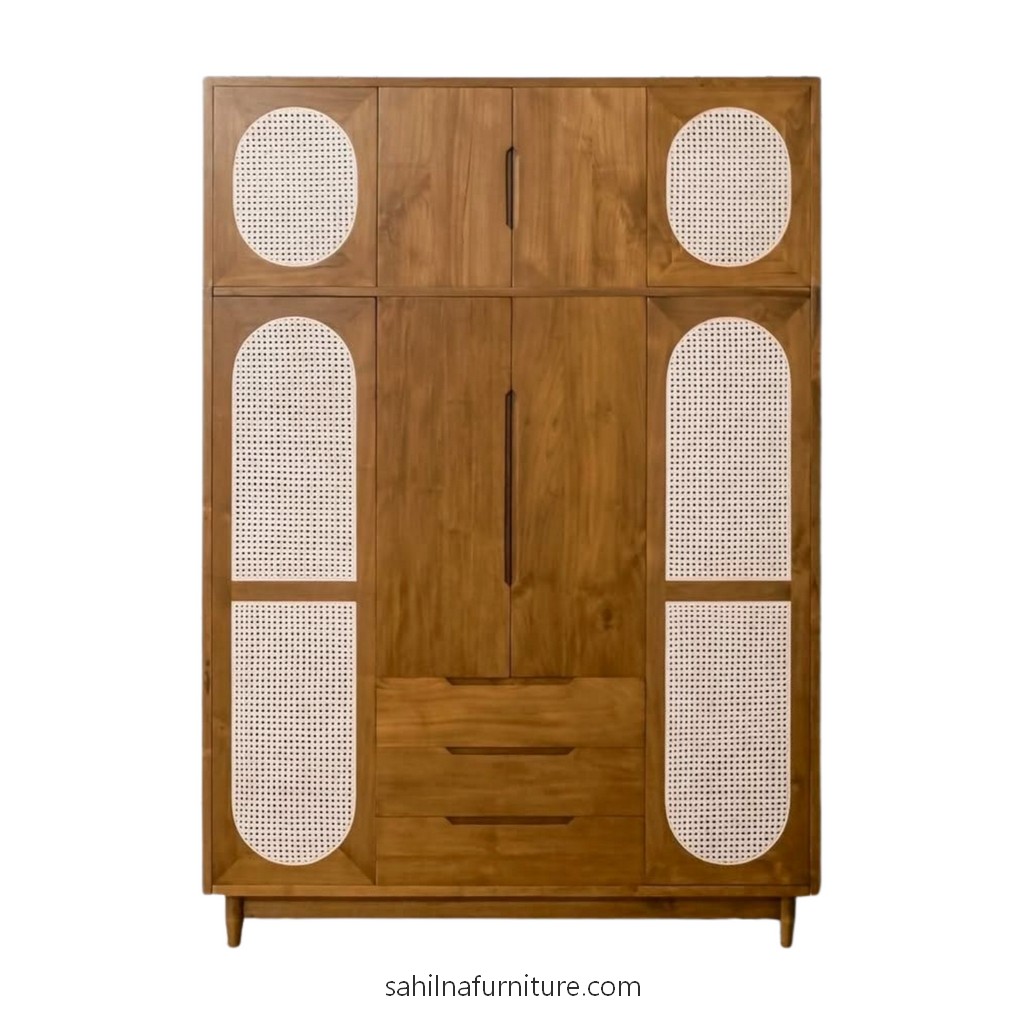
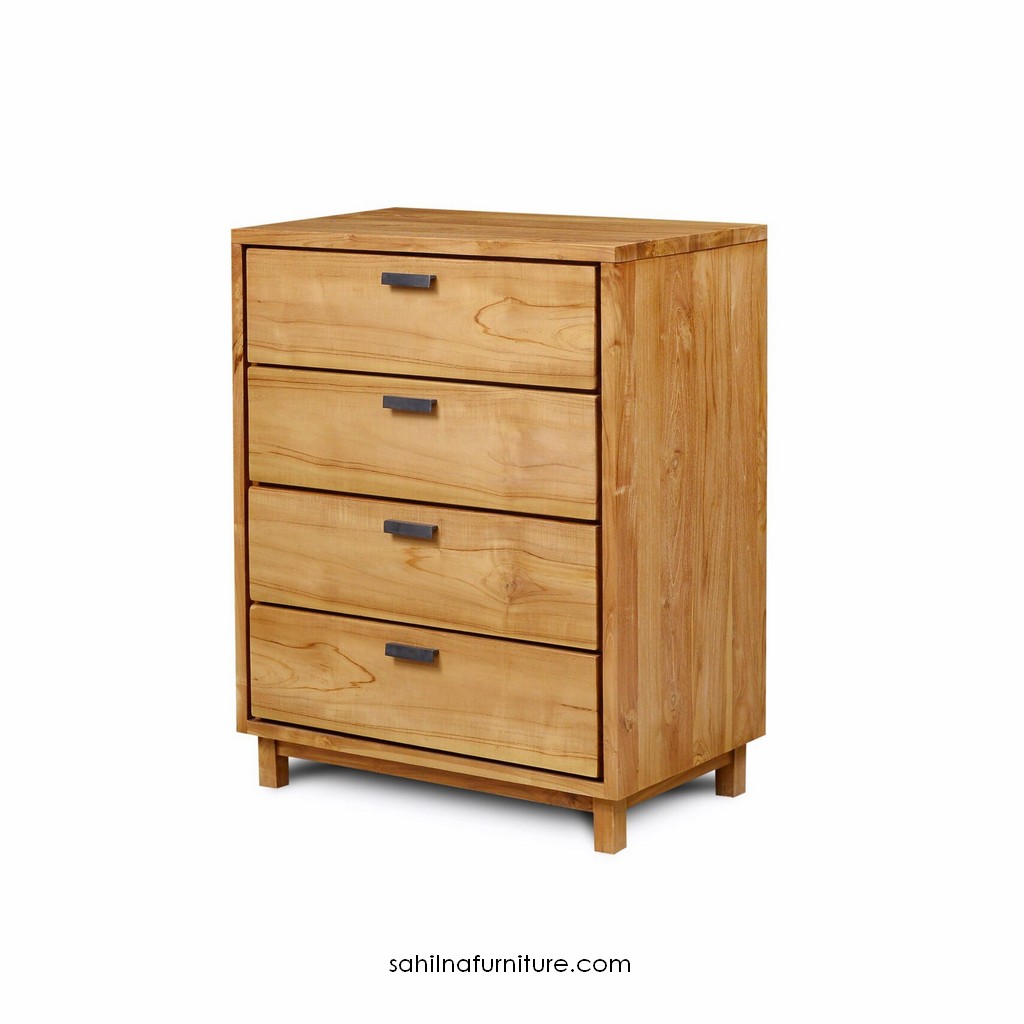
Visualize this: you enter a chamber in which disorder is not permitted to persist. Your teak chest of drawers, a silent sentinel of order, is situated at the center. It is crafted from solid Grade A plantation teak, and its warm honey grain mocks the fragile particle-board catastrophes that your acquaintances refer to as “storage.” A soft-close mechanism whispers “you’re welcome” as each drawer slides with disdainful fluidity, while inferior furniture slams and adheres like the pitiful excuses they are. This is not merely a matter of organization; it is a psychological battle against disorder. Your hosiery align themselves in surrender as you open a drawer. Upon viewing it, guests experience a sense of insignificance, as they are aware that their IKEA knockoffs will crumble under the weight of their own mediocrity long before this piece even observes the passage of time.
 Its effortless superiority across styles is what renders the teak chest of drawers truly vicious. Its clean lines and tapered legs, which channel mid-century Danish arrogance, reduce trendy minimalism to child’s play. Subsequently, it is a reclaimed vintage beast from Jepara’s master carvers, distressed just enough to remind everyone that real age cannot be feigned with sandpaper and Instagram filters. The natural lubricants in premium teak are capable of repelling moisture, insects, and even time itself. This results in a silent, unwavering endurance that is free of deformation and splitting. Place it in a coastal suite, a bohemian loft, or an austere modern penthouse; it adapts without apology, revealing the fervor with which other pieces pursue relevance, while this one simply exists above it all.
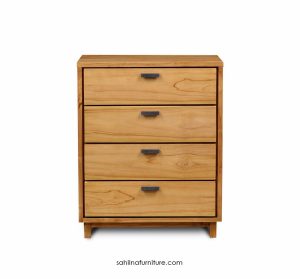 Functionality? It is almost offensive how well it functions. Without a single murmur, six deep compartments (or seven, or five—pick your preference) consume clothing, linens, secrets, and whatever you feed them. The subdued opulence of brass pulls or finger groves lures fingers to contact them, while the inexpensive hardware is punished by its tendency to tarnish or dislodge after a few casual yanks. The height is commanding—it is tall enough to dominate a wall and broad enough to be hoarded without apology. You do not search; you direct. The teak chest of drawers doesn’t accept justifications, so each item has its designated spot. Your existence appears to be curated, intentional, and superior, which is precisely the case.
And the most delightful aspect? The delectable hypocrisy of sustainability. Your teak chest of drawers, which is sourced from responsibly managed plantations, mocks the virtue-signaling of others who are proud of their “recycled” plastic bureaus, which exude pollutants and disintegrate within a decade. Teak regenerates, and artisans in regions such as Jepara invest generations of expertise into each joint and dovetail, resulting in heirlooms that parody disposable culture. It is not compelled to be environmentally friendly; it simply outlives all other alternatives. Purchase it once and observe as successive generations inherit an item that continues to appear superior to their contemporary refuse. Nothing but frigid, calculated longevity—no apologies, no compromises.
Selecting a teak chest of drawers is ultimately not a matter of stowage. It is about asserting one’s dominance in the most discrete manner imaginable. Allow the vulnerable to arrange their quarters with transient refuse that emanates feelings of insecurity. Who are you? You establish a foundation for your space that is enduring, elevating, and discreetly reminds each visitor that this is not equality. Carved into wood, this is hierarchy. The frigid, profound, and utterly deserved gratification strikes every time you yank a drawer and feel that faultless glide.